Best Irrigation Upgrades for Lawns That Last

A fine lawn can deteriorate surprisingly quickly when watering is uneven. Dry edges, soft patches, shallow roots and wasted water often point to an irrigation system that no longer matches the garden it serves. The best irrigation upgrades for lawns are not simply newer components. They are properly designed improvements that deliver the right volume of water, at the right time, to every part of the lawn.
For homeowners, estate owners and property managers, the objective is clear: a discreet, dependable system that protects the appearance and health of a valuable landscape without daily hose work or unnecessary water use. The most effective upgrades begin with a professional survey of the lawn, water supply, soil, planting and existing pipework. From there, each zone can be engineered around the demands of the garden rather than fitted to a generic layout.
Best irrigation upgrades for lawns with uneven coverage
Uneven coverage is one of the most common causes of disappointing lawn performance. Older systems may have poorly positioned heads, mismatched nozzles or zones that have been altered as borders, patios and planting have changed. A lawn can look adequately watered from a distance while receiving too much water in one area and too little in another.
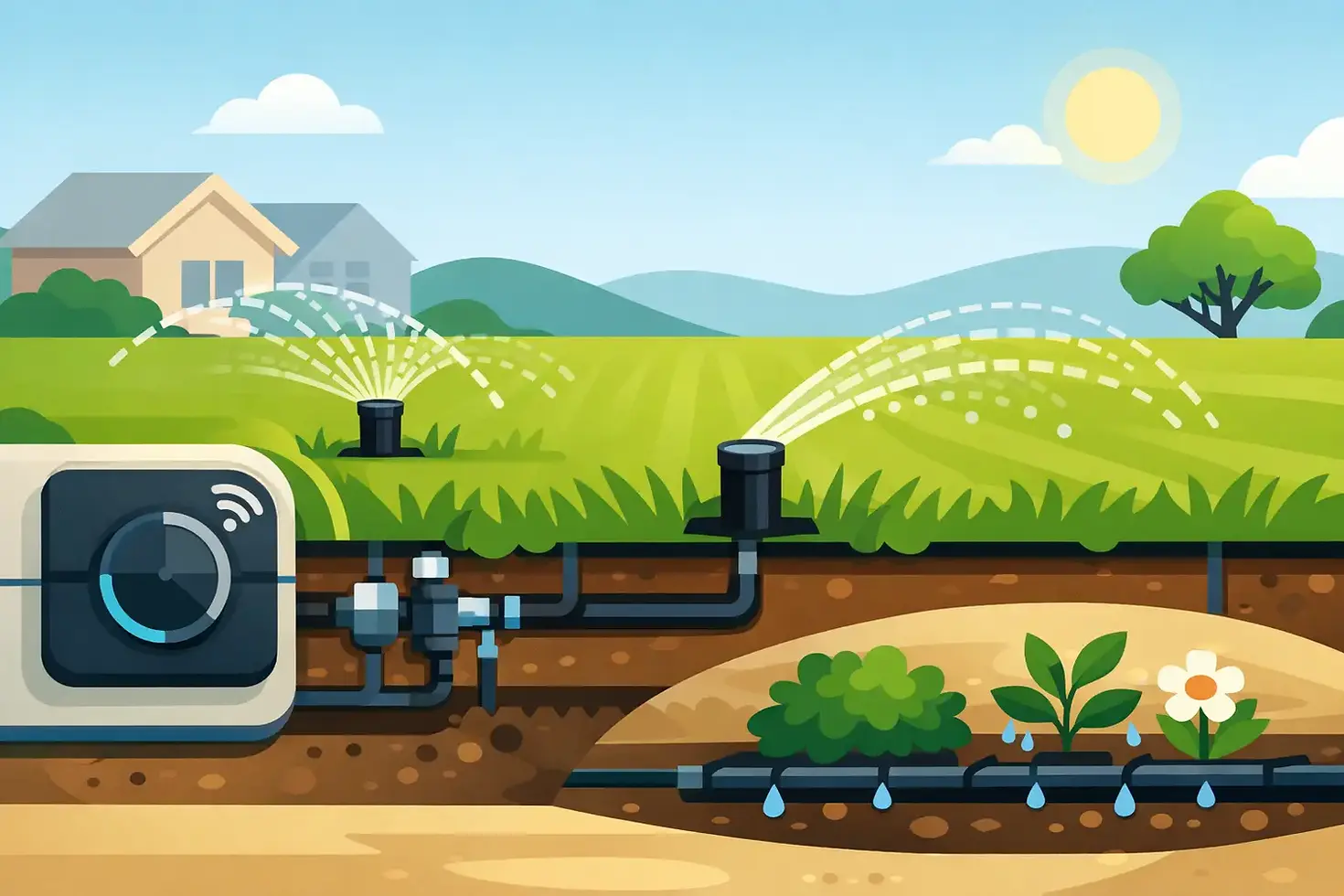
Upgrading to correctly specified pop-up sprinklers is often the most valuable improvement. Quality pop-up heads sit below ground when not operating, preserving a clean lawn finish and avoiding obstacles for mowing. When the system runs, they rise to distribute water across the intended area before retracting again.
The key is not the sprinkler head alone, but the design behind it. Head-to-head coverage, matched precipitation rates and suitable nozzle selection help ensure water reaches the full lawn without overspray onto paths, walls or planting beds. On irregular lawns, separate zones or adjustable arcs may be needed to account for narrow strips, curved edges and shaded corners.
A professional redesign also considers pressure and flow. Adding more sprinklers without checking available supply can reduce performance across the entire system. Precision engineering ensures each zone contains the right number of heads for the water available, so coverage remains consistent rather than weak at the far end of the line.
Smart controllers that respond to real conditions
A basic timer waters on a fixed schedule, whether the lawn needs it or not. That approach can be convenient, but it rarely reflects British weather, seasonal changes or the different needs of sunny and sheltered areas of a garden.
A smart irrigation controller provides far greater control. It can be programmed around individual watering zones and adjusted as conditions change, allowing the system to operate with greater accuracy than a single manual schedule. Depending on the specification, weather data and rain sensors can reduce or pause watering when rainfall makes irrigation unnecessary.
This is particularly useful for larger gardens and properties that may be empty for periods of time. The lawn receives planned, measured irrigation without relying on someone to alter settings before a holiday or after a sudden spell of rain. For busy households, it removes the uncertainty of whether watering has been missed, left running too long or applied at an unsuitable time.
Smart control should still be set up carefully. A controller cannot compensate for poor sprinkler placement, blocked nozzles or incorrect zone design. It is most effective as part of a properly commissioned system, calibrated to the site and reviewed during seasonal maintenance visits.
Separate zones for sun, shade and planting
Treating every part of a garden as one watering area is rarely efficient. A south-facing expanse of turf, a shaded lawn beneath mature trees and a newly planted border do not lose moisture at the same rate. Separate zones allow each area to receive a more suitable schedule and run time.
This upgrade is especially valuable where gardens have developed over time. An extension, new terrace, hedge line or redesigned planting scheme may have changed how sunlight and wind move through the space. Dividing the system into logical zones prevents the compromise of watering every area according to the most demanding part of the garden.
For premium landscapes, lawn sprinklers can also be combined with drip lines and micro-sprayers for beds, hedging and containers. This keeps lawn irrigation focused on turf while delivering slow, targeted water to planting areas. The result is better water discipline and a tidier overall installation.
Rain sensors and soil-aware watering
Rain sensors are a straightforward upgrade with a meaningful role in water conservation. They prevent scheduled irrigation from operating during or shortly after rainfall, avoiding the familiar sight of sprinklers running onto already wet grass. For a system designed to perform reliably through the year, this is a sensible safeguard rather than an optional extra.
More advanced monitoring can help inform watering decisions where soil conditions are varied or a lawn has known problem areas. Heavy clay, free-draining sandy soils, slopes and areas beneath tree canopies can all behave differently after rain. A site survey identifies these factors so the irrigation programme can be tailored accordingly.
There is no single run time that suits every lawn in every month. During warmer, drier periods, the priority is typically deeper, less frequent watering that encourages roots to grow downwards. In cooler or wetter conditions, watering requirements reduce substantially. A well-maintained controller makes these changes simple, but it needs the right baseline settings from the outset.
Pressure regulation and efficient nozzles
Excessive pressure is not a sign of a better irrigation system. It can create misting, where water becomes fine enough to drift away in the wind or evaporate before reaching the root zone. Low pressure, meanwhile, can leave sprinklers failing to throw water to their designed distance.
Pressure-regulated components and modern high-efficiency nozzles help maintain a more controlled spray pattern. They can reduce overspray, improve distribution and make better use of the water supplied to each zone. This is particularly relevant in exposed gardens, where wind can quickly turn an inefficient spray pattern into water on paving, fences and neighbouring areas rather than grass.
The best choice depends on the lawn shape, available pressure, sprinkler spacing and exposure. High-grade components should be selected as part of the overall design, not added in isolation. Durable valves, fittings and pipework are equally important, as hidden failures below ground can waste water long before they become visible on the lawn surface.
Upgrade ageing pipework and valves before problems spread
Older irrigation systems can appear functional while becoming increasingly unreliable. Small leaks, worn valves, damaged cables and blocked filters may cause one zone to run poorly or fail altogether. In some cases, a partial upgrade is the sensible option. In others, retaining old infrastructure can limit the reliability of new controls and sprinklers.
A detailed inspection should assess the condition of the existing system before recommendations are made. This includes checking operating pressure, flow, valve performance, electrical connections, sprinkler height and coverage. It also reveals whether pipes have been compromised by roots, ground movement or previous landscaping work.
Where replacement is justified, tidy installation matters. Pipework should be routed with care, pop-up heads set at the correct finished level and lawn areas reinstated cleanly. The aim is an irrigation system that works quietly in the background, not one that disrupts the appearance of a carefully maintained garden.
Maintenance is part of the upgrade
Even a premium irrigation installation needs periodic attention. Nozzles can collect debris, growing plants can obstruct spray patterns and seasonal changes can make an old watering programme inefficient. Regular servicing protects the investment in the system and helps identify small faults before they affect lawn health or water bills.
A seasonal check-up should include calibration of watering zones, inspection of sprinklers and valves, adjustment of controller settings, and confirmation that rain shut-off measures are working properly. Before winter, the system should also be prepared appropriately to reduce the risk of frost-related damage.
Ideal Irrigation designs, installs and maintains bespoke pop-up lawn irrigation systems for properties across Greater London and the Home Counties. New installations are supported by a market-leading 2-year guarantee, giving clients confidence that the system has been built for dependable long-term performance.
The right lawn upgrade is the one designed around your property, not a catalogue of features added without purpose. A professional survey can turn inconsistent watering into a precise, discreet system that keeps the lawn looking composed through changing weather while using water with far greater care.


Comments