Lawn Irrigation for Clay Soil That Works

A lawn on clay can look immaculate in spring, then turn patchy after a short dry spell or heavy shower. The issue is not simply how much water it receives, but how quickly the ground can take it in and hold it. Lawn irrigation for clay soil must be designed around that behaviour. A generic sprinkler layout that applies water too quickly can create surface pooling, runoff and shallow rooting, wasting water while leaving the lawn underperforming.
For high-quality residential gardens, the answer is a properly engineered irrigation system. It should deliver measured amounts of water at a rate the soil can absorb, across zones that reflect the lawn's shape, exposure and drainage conditions. This is where bespoke system design makes a visible difference.
Why Clay Soil Needs a Different Irrigation Approach
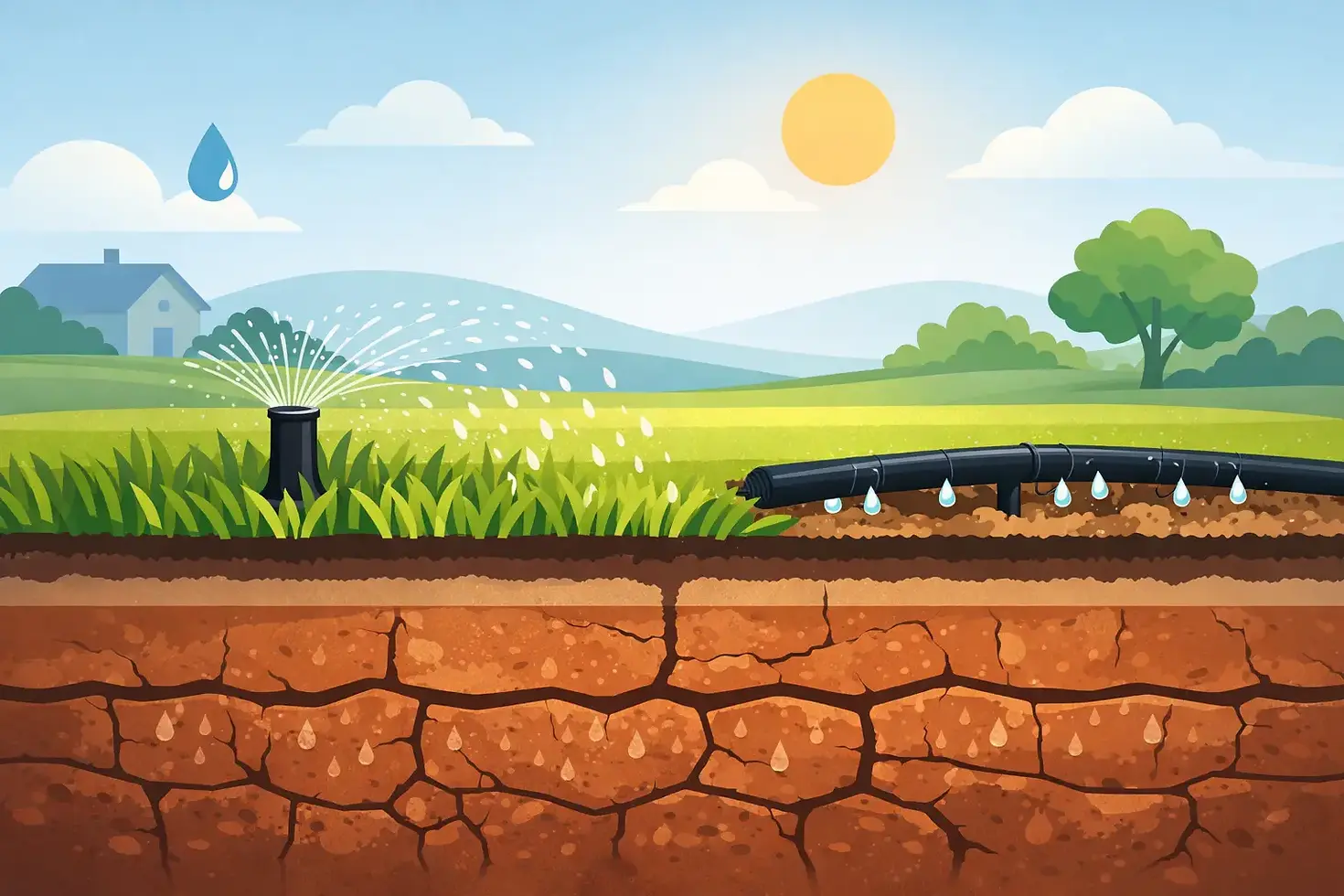
Clay soil is made up of very fine particles packed closely together. When it is dry, it can become hard and compacted, with cracks forming across the surface. When saturated, it retains water for a long time and can exclude the oxygen that healthy grass roots need.
This creates an awkward but manageable balance. A lawn may need water during warm, dry weather, yet one long watering cycle may run straight across the surface before it has time to penetrate. On sloping areas, that excess water can carry soil, nutrients and lawn treatments with it. Near patios, paths and buildings, it can also create avoidable puddling.
The objective is not to keep clay continually wet. It is to provide water deeply enough to encourage resilient roots, then allow the soil to drain and the root zone to breathe. The right schedule will depend on the lawn's condition, grass type, shade, exposure and local rainfall, rather than following a fixed timetable throughout the year.
Lawn Irrigation for Clay Soil Starts With the Site Survey
A premium pop-up system should never be selected solely by lawn size. Before installation, a thorough survey identifies how the land performs in real conditions. This includes gradients, existing drainage, compacted areas, established trees, sunny borders, shaded edges and the position of utilities.
It is also important to assess the available water supply. A system needs adequate pressure and flow to operate each zone evenly. If too many heads run at once, coverage can become inconsistent. If pressure is too high, fine mist can drift in the wind and miss the grass altogether. Careful hydraulic planning allows each sprinkler zone to deliver the correct precipitation rate without compromising the appearance or function of the garden.
Soil compaction deserves particular attention. Irrigation cannot correct severely compacted clay on its own. In some gardens, aeration, top-dressing or drainage improvements may be advisable before the system is commissioned. Watering a compacted lawn more often is rarely the right solution.
Zoned Design Prevents Overwatering
A well-designed lawn is rarely one uniform area. The grass beside a south-facing terrace may dry considerably faster than a shaded lawn beneath mature trees. A narrow strip beside a hedge may have different root competition and wind exposure from a broad central lawn.
Separating these areas into independently controlled zones gives the system the flexibility to respond to their actual needs. Pop-up sprinklers can be positioned for head-to-head coverage, ensuring no section depends on overspray from a neighbouring head. Drip lines or micro-sprayers can serve planting areas separately, so border irrigation does not dictate the lawn's schedule.
This approach is more precise than trying to make one long cycle suit every part of the garden. It reduces wasted water, protects hard landscaping and helps maintain a more even colour and density across the lawn.
Slow Watering Produces Better Results
For clay, the most effective method is usually cycle and soak watering. Rather than applying the full requirement in one extended run, the controller divides it into shorter cycles with time in between. The first cycle wets the surface. The pause allows water to move down through the soil profile. A later cycle can then add moisture without overwhelming the ground.
For example, a lawn zone may run for a short period in the early morning, rest, and then run again. The precise duration and pause time should be set after observing how the soil and sprinkler pattern perform. There is no universal programme that suits every clay lawn.
Early-morning watering is normally preferable. It gives moisture time to reach the roots before daytime heat increases evaporation, while allowing grass blades to dry after irrigation. Evening watering can be appropriate in specific circumstances, but regularly leaving turf wet overnight may increase disease pressure, particularly where airflow is limited.
A smart controller provides useful control, but it is only as effective as its programming and calibration. Seasonal adjustments are essential. Spring rainfall, summer heatwaves and autumn moisture levels all call for different settings. The goal is to respond to conditions, not simply to automate an unsuitable schedule.
Drainage and Irrigation Must Work Together
Many clay-soil lawns show signs of poor drainage before an irrigation system is even considered. Water may stand in a low point after rain, grass may thin near compacted routes, or moss may become persistent in shaded areas. Adding irrigation without addressing these conditions can compound the problem.
The correct solution depends on the cause. Surface grading may improve the direction of water movement in some gardens. Aeration can help where the upper layer has become sealed. More serious waterlogging may require a dedicated drainage approach. An experienced irrigation specialist will account for these factors in the design, rather than treating sprinklers as an isolated installation.
This does not mean every clay lawn needs extensive drainage works. Well-structured clay can support excellent turf, especially where watering is controlled and the lawn is maintained properly. It does mean that irrigation must respect the soil's slower infiltration rate and the garden's natural low points.
Equipment Choices That Protect the Garden's Appearance
Discreet pop-up sprinklers are particularly well suited to formal lawns and landscaped residential gardens. When not in operation, they sit below ground level, preserving clean lines and avoiding hoses across paths or borders. During watering, matched nozzles and accurately selected arcs provide controlled coverage with minimal overspray.
Durable components matter because clay expands when wet and contracts as it dries. Over time, this movement can place stress on poorly installed pipework and fittings. High-grade materials, correct trenching depths and careful backfilling help protect the system for the long term. Valve boxes should also be located with future servicing in mind, allowing maintenance without unnecessary disruption to the lawn.
A complete system map is equally valuable. It records the position of irrigation zones, valves and pipe runs, giving property owners and future maintenance teams confidence when planning garden improvements or repairs.
Ongoing Calibration Keeps Water Use Efficient
An irrigation system should not be treated as fit-and-forget equipment. Sprinkler heads can be affected by mowing, soil movement, garden works or seasonal growth. A slight change in angle may send water on to a path, fence or planting bed rather than the lawn.
Regular servicing keeps the system working as designed. This typically includes checking the controller programme, inspecting heads and nozzles, confirming pressure, clearing obstructions, testing zone coverage and making seasonal adjustments. Before winter, the system should be prepared to reduce the risk of frost damage. In spring, it should be recommissioned and calibrated for the growing season.
For larger gardens, estate grounds and properties with mature landscaping, this level of ongoing care is particularly worthwhile. It protects the investment in both the irrigation infrastructure and the lawn itself, while keeping water use proportionate to the garden's real requirements.
Signs Your Existing System Needs Attention
A lush lawn should not require water running along the surface or pooling around sprinkler heads. If this is happening, the problem may be incorrect run times, unsuitable nozzles, poor zoning or an underlying drainage issue. Patchy growth can also indicate uneven coverage rather than a lack of overall watering.
Other warning signs include sprinkler heads that fail to retract, water spraying on to paving, zones that run at noticeably different pressure, or areas that remain soft long after irrigation has finished. These issues are often repairable, but leaving them unchecked can increase water use and damage lawn quality over time.
For clay gardens, precision is the difference between a lawn that merely survives dry weather and one that remains healthy, even and presentable through changing conditions. A professionally surveyed system, installed with durable components and maintained seasonally, gives the soil what it can absorb - and gives the property owner a better-looking lawn without the burden of manual watering.


Comments